It worked for eight weeks. The scale moved, the clothes changed, the routine held. Then it stopped, and nothing you're doing differently explains it, because you aren't doing anything differently.
A plateau has two possible causes and they need different fixes. Adaptive thermogenesis — your body now burns fewer calories than its size predicts — is real and expected after two to three months of restriction. Logging drift — your entries quietly shrinking while your eating didn't — is more common and easier to fix. Check the second before assuming the first. If it's genuinely metabolic, the MATADOR trial found alternating two weeks of restriction with two weeks at maintenance produced more fat loss over the same period than dieting continuously.
This is the point where most people either cut harder or quit. Both are usually the wrong call, because a plateau has two possible causes with opposite fixes, and almost nobody checks which one they've got.
#Cause one: your body adapted
The straightforward part first. You weigh less than when you started, so the same intake is now a smaller deficit — a 90kg person eating 1,800 calories is cutting harder than an 80kg person eating the same. That alone would slow you down.
But the effect is larger than arithmetic predicts. During sustained energy restriction, resting energy expenditure falls by more than the loss of body mass accounts for — a measured phenomenon called adaptive thermogenesis. Your body is spending less than a body of your new size “should,” and it does this precisely because you've been in a deficit.
The MATADOR trial
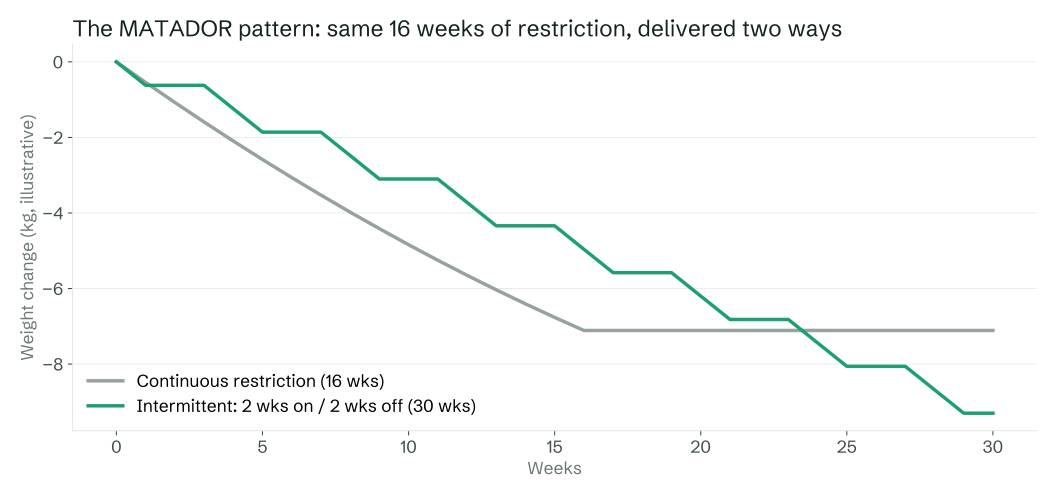
Fifty-one men with obesity were randomised to 16 weeks of continuous restriction at 67% of maintenance, or the same 16 weeks delivered as eight two-week blocks alternating with two-week blocks at energy balance. The intermittent group achieved greater weight and fat loss over the same total restriction, with a smaller reduction in resting energy expenditure — suggesting that interrupting restriction with maintenance “rest periods” reduces the compensatory metabolic response. Source: International Journal of Obesity, 2018, Byrne et al.
This is real, it's expected, and it isn't a character flaw. It's also, in most cases, not the first thing to fix.
#Cause two: your log drifted
The uncomfortable part. “I'm eating exactly the same” is one of the least reliable statements in nutrition, and not because people lie. It's because intake drifts in ways that don't register.
Validation research finds around 30% of people misreport intake in every method, including with a food scale, and the direction is nearly always down. Over two months the pattern is predictable: portions creep back toward what they were, the second coffee stops being logged, weekend meals get skipped in the app because there's no database match, and the wine quietly leaves the record altogether. None of these feel like changes. Together they can close a 400-calorie deficit without touching the meals you think of as “the diet.”
The tell is disagreement: the app says you're in a deficit and the scale says you aren't. When those two diverge, the app is the one that moved.
A plateau where the log says deficit and the scale says maintenance is almost never metabolic. It's the log.
#Which one have you got?
Before changing anything, run one honest week. Not stricter — more complete. Specifically:
- Every drink, as its own entry. Coffee with milk, juice, alcohol, soft drink.
- Every meal you didn't cook, estimated generously. Restaurant portions are underestimated by 20–38% in the research.
- Cooking fats and sauces, named explicitly rather than absorbed into “chicken and vegetables.”
- The weekend, logged with the same care as Tuesday.
If that week comes in noticeably higher than your recent average, you've found the plateau. Fix the log, not the target. For most people this is where the story ends.
If the honest week matches your usual numbers and the scale still hasn't moved over three to four weekly averages, it's probably adaptive. That's when the next section applies.
#If it's genuinely metabolic
Don't cut deeper first. A further reduction increases the adaptive response you're already fighting and sharply raises the odds you abandon the whole thing. It's the instinctive move and the trial evidence points the other way.
Take a structured break. One to two weeks at your estimated maintenance — a calculated number, not a cheat week — then back to the deficit. That's the MATADOR protocol in miniature, and it's the intervention with the best randomised evidence for improving loss efficiency rather than just pausing it. Expect a small, temporary rise on the scale from glycogen and water; it isn't fat.
Recheck your maintenance. The number you started with was for a heavier person. Recalculate at your current weight and set the deficit from there. Our calorie deficit calculator does the arithmetic.
Hold protein and add load. Preserving muscle through a plateau matters more than pushing through it — lean mass is a large driver of expenditure, and a deficit that's costing you muscle is worsening the plateau it's supposed to break. Keep protein at 1.2–1.6g per kilogram and, if you aren't already, add two or three resistance sessions a week.
See the drift before the scale does.
Rekkon watches your eating patterns across weeks and tells you when the log and the trend stop agreeing.
Try Rekkon free
#What a plateau isn't
Two things get mistaken for stalls and aren't.
Water. A salty meal, a hard training block, a change in carbohydrate intake or the menstrual cycle can hold one to two kilograms for days. A single flat fortnight isn't a plateau. Judge on weekly averages over three to four weeks, not on any morning.
The end of the first phase. Early loss is fast partly because it includes glycogen and the water bound to it. When that's gone, the rate settles to something slower and more honest — roughly the half-kilogram a week the original deficit was designed for. Slower than the first month isn't stalled. It's the real rate.
#The longer view
Everyone who loses a meaningful amount of weight plateaus, because the deficit that got them there shrinks as they do. Among the 10,000+ people in the National Weight Control Registry who have kept substantial weight off for years, the common thread isn't that they never stalled. It's that they kept some form of monitoring going through the stalls, so they could tell drift from adaptation and respond to the right one.
That's the whole skill. Not cutting harder — knowing which plateau you're in.
#Common questions
Why have I stopped losing weight even though I'm eating the same?
Two reasons, usually both. First, you weigh less than when you started, so the same intake is a smaller deficit — and your body reduces its energy expenditure by more than the weight loss alone predicts, a measured effect called adaptive thermogenesis. Second, “eating the same” is rarely true: portions creep, snacks go unlogged and drinks disappear from the record. Research finds around 30% of people misreport intake even with a food scale, and the drift is always in the same direction.
How long does a weight loss plateau last?
A true stall usually means two to four weeks with no downward trend in your weekly average — anything shorter is often water, salt or the menstrual cycle. Genuine metabolic plateaus can persist as long as the deficit is held continuously. That's why diet breaks are studied: in the MATADOR trial, the two-week maintenance blocks appeared to reduce the compensatory slowdown rather than just pause it.
Should I eat less to break a plateau?
Not as a first move. Cutting further deepens the adaptive response and raises the odds you quit. Check the log first: recount drinks, restaurant meals and portions honestly for one week. If intake really hasn't drifted, a structured break at maintenance — not a cheat week, a calculated maintenance intake for one to two weeks — has better trial evidence than a deeper cut.
What is a diet break and does it work?
A planned period of one to two weeks eating at your estimated maintenance level, then returning to a deficit. In the MATADOR randomised trial, men with obesity who alternated two weeks of restriction with two weeks at maintenance lost more weight and more fat over the same total restriction period than those who dieted continuously, and regained less at six months. It's not a licence to eat freely; it's a deliberate reset at a calculated intake.
Is a plateau a sign I should give up?
No — it's a sign the first phase worked. Everyone who loses a meaningful amount of weight plateaus, because the deficit that got you here is smaller now. Among the 10,000+ people in the National Weight Control Registry who kept substantial weight off for years, the common thread isn't that they never stalled. It's that they kept monitoring through the stalls.